
Alexis Roussel
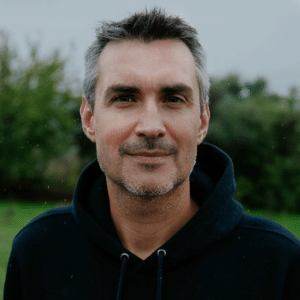
Alexis Roussel is Co-founder of Nym.com, the start-up solving the internet’s privacy crisis. He holds a Masters in Technology Public Law and has served as an E-Governance Specialist for the United Nations, and was the President of the Pirate Party of Switzerland – aimed at promoting a human-centric and distributed approach of a technological society. He is frequently in the Swiss media discussing privacy and digital rights issues. He is the co-author of the book “Our precious digital integrity” promoting a novel fundamental right to the digital integrity of the human being.
Belen Luna Sanz
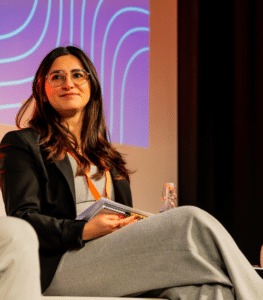
Belén Luna Sanz is a policy and advocacy strategist working at the intersection of technology, democracy, and women’s rights. She leads policy at WHAT TO FIX, focusing on how platform business models and monetisation governance shape online harms and public debate.
Over the past decade she has worked across Latin America and Europe – from co-developing national development agendas in Latinamerica to coordinating campaigns across coalitions of 100+ civil society organisations – helping shape landmark rules on AI, platform accountability, and online violence against women. She writes and speaks regularly on digital governance, inauthentic online behaviour, and what it takes for communities to organise against concentrated technological power.
Originally from Bolivia, she remains committed to equality, accountability, and systemic change.
Helen Lalthanpari

Helen Lalthanpari is an AI governance expert, regulatory adviser and founder of the Data & AI Governance Institute (daigi.org), a UK‑registered institute helping professionals govern AI in practice and building a global AI governance community. A lawyer by training, she holds an MBA and professional certification in AI governance. She has spent 18 years across legal C‑suites, venture capital, business strategy and consulting, working with multinational organisations across regulated and high‑growth sectors. Her research focuses on upstream AI governance: whose knowledge enters AI systems before they are deployed. She is Mizo, from Northeast India, and is based in Paris.
Caroline De Cock

Caroline De Cock, LL.M., is Head of Research at information labs and Senior Fellow at the Lisbon Council. A long-time strategist at the intersection of technology, law, and AI governance, she has spent over two decades shaping EU and global digital policy. She specialises in translating complex issues in AI, media, copyright, and Internet governance into accessible insights for policymakers and the public. Caroline is also the Founder of Square-up Agency and N-square Consulting, which advises technology and civil society organisations. Having lived in 11 countries across four continents, she brings a uniquely global perspective to regulation. Her book, AI Tools, Not Gods, was published in January 2026.
John A. Kwarsick

John A. Kwarsick is the founder of Kwarsick Consulting and creator of
WHEEL, a research programme examining how people and institutions retain
meaningful judgment and authority as AI capabilities advance.
His career includes leadership roles at Microsoft and CheckPoint,
spanning enterprise technology and cybersecurity. His work focuses on
the human conditions that make AI governance effective: clear decision
rights, the capacity to challenge automated recommendations, and the
ability to intervene before harm occurs.
Through research papers, diagnostic frameworks and conference
presentations, he explores the gap between assigning human oversight and
making it work in practice. Based in Atlanta, he brings an operational
perspective to debates about AI adoption, institutional accountability,
and preserving human agency in an increasingly automated world.
Jonatan Tensetti

Jonatan Tensetti is an AI development strategist at the Municipality of
Trelleborg, Sweden, working with the practical implementation and
governance of AI in public services.
With a background in teaching and more than a decade of recognised work
in digitalisation and educational technology, he has written several
books on AI in education and regularly speaks on AI, digital
transformation and public-sector innovation. He also serves as
spokesperson on AI policy for the Swedish Pirate Party.
Jordi Calvet-Bademunt
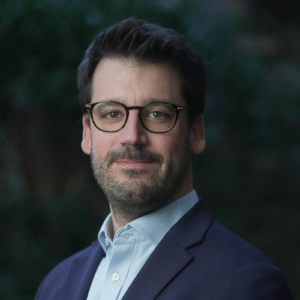
Jordi is a Senior Research Fellow at The Future of Free Speech at Vanderbilt University, where he leads the organization’s research program on AI and freedom of expression. His work examines how AI governance and risk-management obligations affect fundamental rights, and his commentary has appeared in outlets including MSNBC, Lawfare, and Tech Policy Press. He is a member of the Freedom Online Coalition’s Advisory Network, which advises the Coalition’s more than 40 member governments. Previously, Jordi spent nearly a decade working at the Organisation for Economic Co-operation and Development (OECD) and as an associate at leading European law firms. He holds advanced degrees from Harvard University and the College of Europe in Bruges, Belgium.
Narmadha Kamal
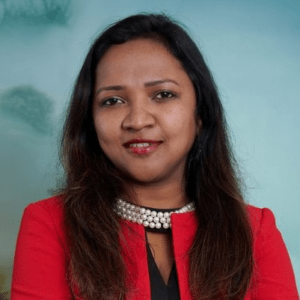
Narmadha Kamalakannan is a Paris-based doctoral researcher at Ecole Des
Ponts Business School and an HR leader with 19 years of experience in
talent, leadership, and organizational transformation.
Her research focuses on human-centric AI readiness, organizational
culture, and the future of work. She is also the Founder of HumIA5,
built with a blend of her research and professional expertise, offering
an AI Readiness Scan to help organizations understand the human
conditions needed for responsible AI adoption.